
What causes green algae on render?
Green algae grows on render wherever there's a reliable combination of shade and dampness, since both conditions let algae spores establish and spread across the surface. It's a different organism from the red-orange Trentepohlia found on many Irish gables, and tends to favour ground-level walls and areas beneath overhanging foliage.
Render close to hedging, under trees, or on the shaded side of a house is most exposed, since these spots dry out more slowly after rain than open, sunlit walls nearby.
Ground-level render is affected more often than upper storeys, partly because splash-back from wet soil and paving keeps the base of a wall damp for longer, and partly because these areas tend to see less direct sunlight than the roofline above.
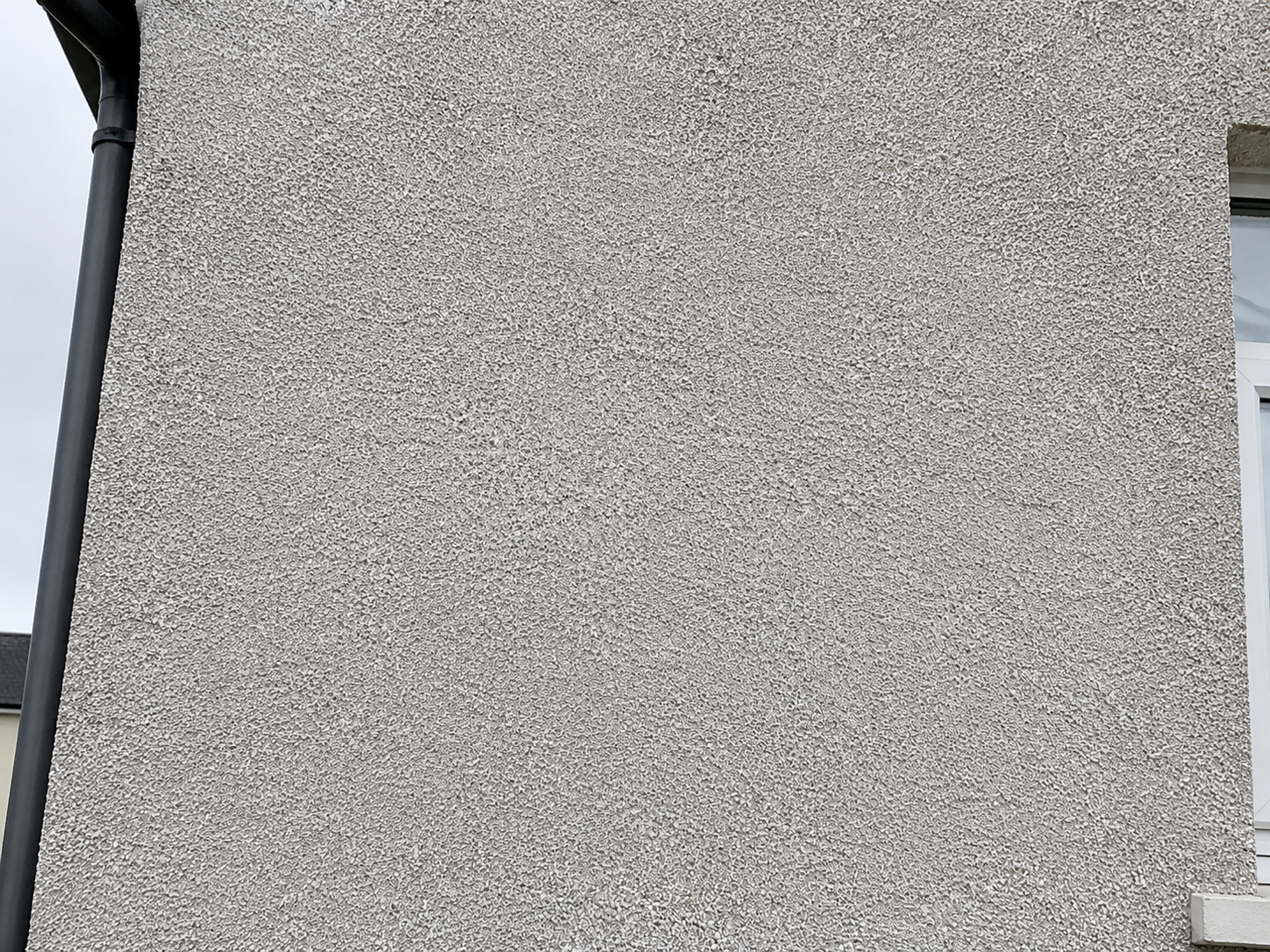
What is black staining on render actually caused by?
Black staining on render is usually caused by a fungal growth containing melanin, a dark pigment that gives the streaking its characteristic colour. This is a different organism again from green algae, though both thrive under similar damp conditions.
Black staining favours areas kept consistently wet, which is why it so often appears below a gutter joint, downpipe or window sill where water regularly overflows or drips onto the render below.
Because it's fungal rather than a surface deposit, black staining can be more stubborn than ordinary dirt to shift with a simple wash, and it tends to darken further the longer the underlying damp source is left unaddressed.
Why does gutter overflow lead to black streaking on walls?
Gutter overflow leads to black streaking because it keeps a specific section of wall wetter than the surrounding render, giving fungal spores exactly the damp conditions they need to establish. A blocked or overflowing gutter effectively creates its own permanently damp patch below the fault.
This connection is worth checking directly: if black staining traces a clear line down from a gutter joint or corner, the gutter itself is very likely part of the cause rather than just the render.
The same logic applies to green algae in some cases, particularly where a downpipe leaks slightly at a joint rather than overflowing at the top. A steady drip in one spot can create a permanently damp patch even on an otherwise sunny wall.
How does removal differ between green algae and black staining?
Both are removed using the same low-pressure softwash approach, since a biocide treatment works on fungal and algal growth alike. The treatment is applied evenly, left to dwell, then gently rinsed away, without the pressure that would spread spores or damage the render finish.
Where both are present on the same wall, they're treated together in a single visit rather than as two separate jobs, since the same low-pressure application and dwell period addresses both organisms at once.
- Identify whether staining is linked to a nearby gutter, downpipe or persistent damp source.
- Apply the softwash treatment evenly across the affected render.
- Allow the treatment to dwell so it can work into both algae and fungal growth.
- Rinse gently to clear the surface without disturbing the finish.
When to call a professional
A professional softwash is worth calling in once green algae or black staining covers a noticeable area, or once staining keeps returning to the same spot after a DIY attempt. Persistent regrowth in one location often points to an ongoing damp source that's worth checking alongside the clean.
Checking the gutter above a stained section before booking a clean can save a repeat visit later, since treating the render alone won't stop staining returning if the water source behind it is still active.
Booking softwashing in County Wexford clears both algae and fungal staining in one visit. Homes in Enniscorthy dealing with staining linked to overflow often add gutter cleaning to the same visit, alongside a full render cleaning treatment.
Frequently asked questions
Can green algae and black staining appear on the same wall?
Yes, it's common to see both on the same elevation, since they favour similar conditions of shade and dampness but often concentrate in slightly different spots. Green algae tends to spread more broadly across a damp surface, while black staining often forms in streaks below a specific water source.
Does black staining mean there's a leak somewhere?
Black staining doesn't always mean a leak, but a persistent streak in one location, especially below a gutter joint or window sill, is worth checking. If the staining follows a clear path from a single point, an overflow or small leak nearby is a common cause.
Is black staining on render just dirt rather than fungal growth?
General dirt can darken render over time, but black staining that keeps returning in the same damp spot after cleaning is more often fungal, since dirt alone doesn't usually regenerate the same way. A softwash treatment addresses the fungal cause rather than just the surface colour.
Will cleaning gutters help stop black staining on walls below?
Yes, if the staining is linked to gutter overflow, clearing the blockage removes the ongoing water source that's keeping that section of wall wet. Softwashing then removes the existing staining, while a clear gutter helps prevent it from returning in the same spot.