
What is pure water window cleaning?
Pure water window cleaning is the practice of washing glass and frames with de-mineralised water instead of tap water and detergent. Mains water is passed through carbon, resin and reverse osmosis filters until its total dissolved solids (TDS) reading falls close to 0 parts per million. Water this pure is naturally unstable and keeps trying to pick up minerals, so as it evaporates on the glass it carries dirt away with it instead of leaving spots behind.
The filtered water is fed through a telescopic pole to a soft-bristle brush head at the top. The brush agitates the glass, frame and sill together while pure water flows continuously, then a final rinse of the same water carries the loosened dirt away. No detergent stage is needed, so there's nothing left to rinse off afterwards.
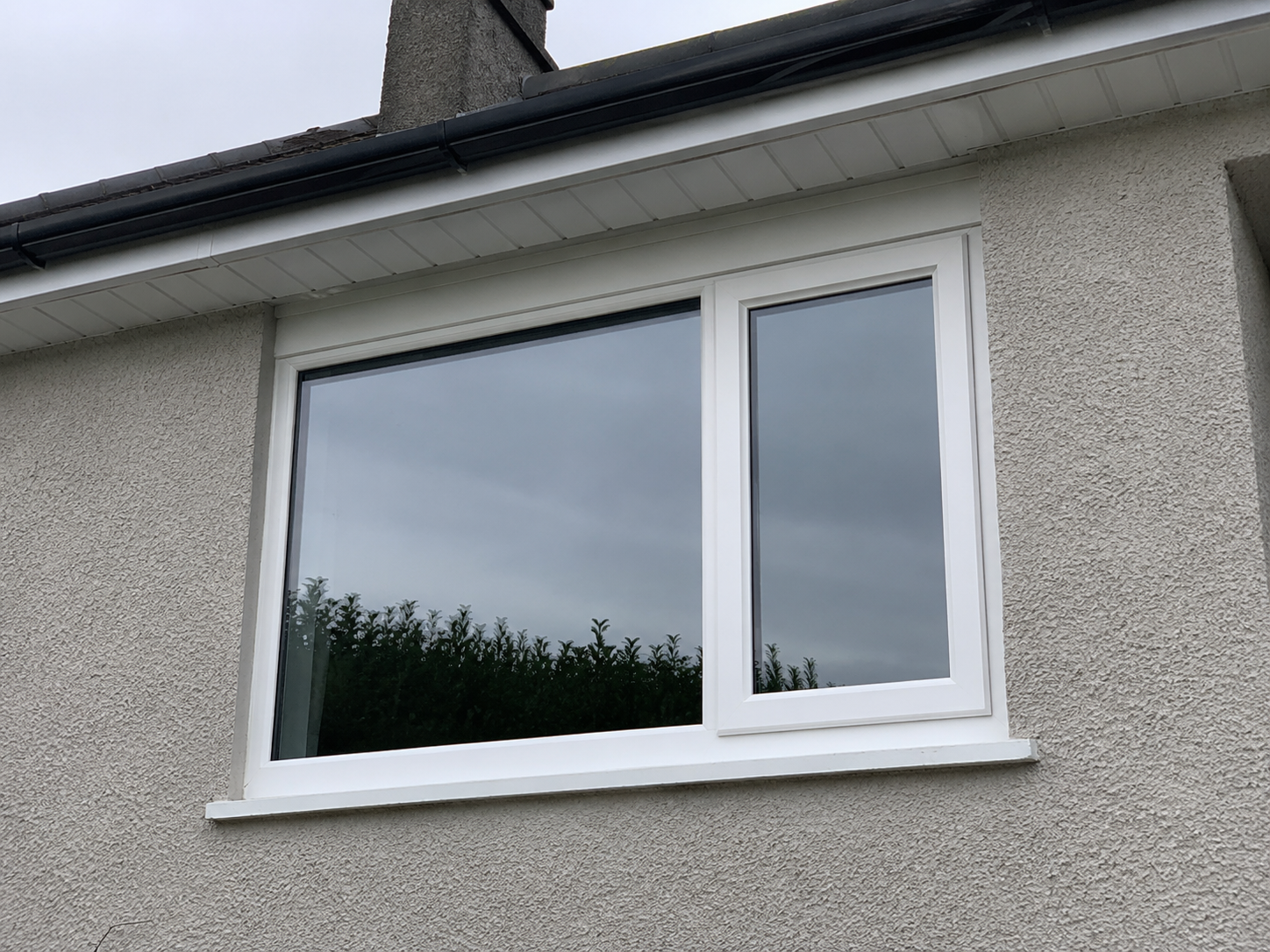
Why do traditional squeegee cleans leave streaks?
Traditional cleaning leaves streaks because tap water and washing-up liquid both add residue to the glass rather than fully removing it. Ordinary tap water carries dissolved calcium and other minerals that stay behind as fine spots once the water evaporates, particularly in hard-water areas. Detergent adds a second layer on top: a thin surfactant film that dries with a faint haze.
That film also changes how the glass behaves afterwards. A surfactant residue attracts airborne dust and pollen more readily than bare glass, so windows appear dirty again sooner. A squeegee clears the bulk of the water from the surface, but it can't remove minerals or detergent that are already dissolved within it.
Does pure water window cleaning include frames and sills?
Yes, pure water systems clean frames and sills as standard, because the pole-fed brush scrubs the full window unit before rinsing rather than just the glass pane. A soft-bristle head is worked over frame, sill and glass together, loosening dirt and algae from uPVC and timber as well as the pane itself. The final rinse then carries all of that debris away in one pass.
How does reach and safety compare?
Pure water poles reach upper-floor windows from ground level, which removes the need for a ladder against the wall. Systems typically extend to three or four storeys, so most homes in Enniscorthy and the surrounding towns can be cleaned without anyone leaving the ground. This also means the cleaner can see the whole pane clearly while working, rather than balancing on a ladder.
Traditional cleaning on upper floors usually means ladder work, which is slower and depends on stable, level ground beneath the ladder feet. Awkward angles, bay windows and conservatories can also limit where a ladder can safely be positioned in the first place.
| Factor | Pure water | Squeegee & detergent |
|---|---|---|
| Finish | Streak-free, no spotting | Can leave mineral spots |
| Residue | None — water is mineral-free | Thin detergent film often remains |
| Frames and sills | Cleaned as part of the process | Usually glass only |
| Reach and safety | Ground-level pole, no ladder | Ladder needed for upper floors |
| Longevity of clean | Stays cleaner for longer | Attracts dust sooner |
Which method keeps windows cleaner for longer?
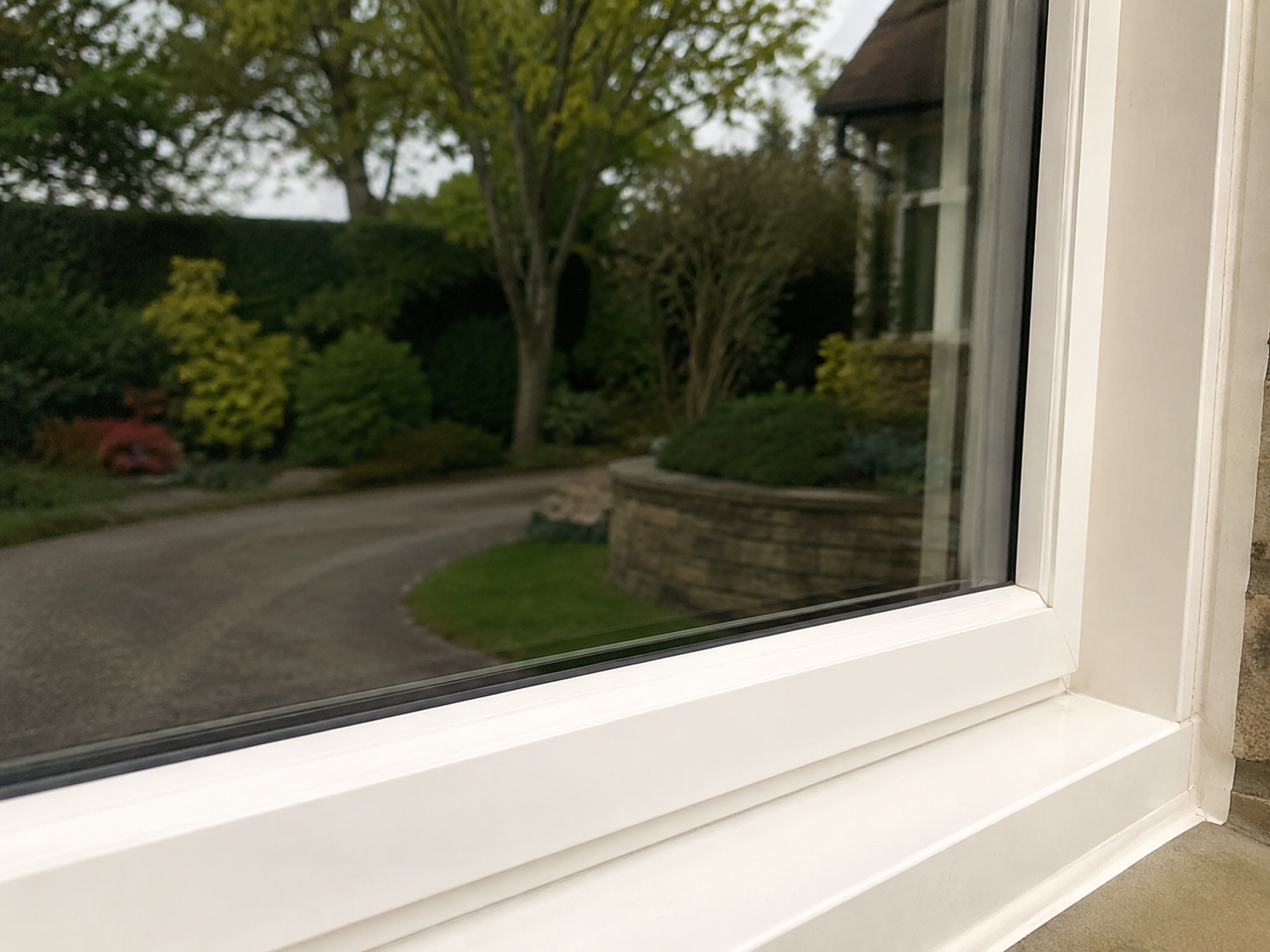
Pure water finishes stay cleaner for longer because there's no detergent film left behind to attract dust and airborne salt. Coastal Wexford air carries fine salt and sand that settles fastest on a surface with any residue, so a bare, mineral-free finish resists new grime for longer between cleans. A traditional detergent finish, by contrast, gives dust something to stick to almost immediately after cleaning.
When to call a professional
A professional pure water system is worth calling in once windows are above ground-floor reach, or once frames and sills need attention alongside the glass. The filtration equipment needed to reach close to 0 ppm TDS is specialist and not something most homeowners keep on hand, so a DIY clean with tap water will always carry some mineral residue regardless of technique.
For a full exterior clean rather than glass alone, professional window cleaning can be paired with gutter or softwash work on the same visit. Booking pure water window cleaning in County Wexford also means the system, filtration and pole work are maintained to a consistent standard clean after clean.
Frequently asked questions
Does pure water window cleaning work well in winter?
Yes, pure water works at any time of year because it cleans through filtration and brushing rather than heat. In freezing conditions the pole and hose need protecting from ice, but the cleaning itself isn't temperature dependent. Slower drying in cold, damp weather doesn't affect the streak-free result once the window has dried.
Is pure water cleaning suitable for conservatories and skylights?
Pure water systems can reach angled and overhead glass such as conservatory roofs and skylights using the same pole and brush setup, without a ladder. The soft brush is gentle enough for sealant lines and glazing bars. Reach and angle depend on the roof pitch and pole length available on the day.
Why might a squeegee still be used alongside pure water?
A squeegee is sometimes used on ground-floor glass for a fast finish on light, everyday dirt, or in tight spaces where a pole can't manoeuvre easily. For most homes, though, pure water alone covers the full window unit, frame and sill without needing a second method.
Does pure water cleaning remove old sealant or paint marks?
No — pure water and a soft brush lift dirt, dust and algae, but they aren't designed to remove hardened sealant, paint or adhesive residue. Marks like these usually need a different, more targeted approach and are best pointed out before a clean so they can be discussed separately.