
Is softwashing safe for render, paint and gardens?
Softwashing is safe for render, painted surfaces and surrounding gardens because it relies on low water pressure and a controlled biocide treatment rather than force. The pressure used is closer to that of a garden hose than a pressure washer, which is what protects delicate surfaces during the clean.
Softwashing is the practice of treating organic growth such as algae, moss and lichen at a biological level using a low-pressure application, rather than trying to blast it off mechanically.
This distinction is what makes the process suitable for a wider range of surfaces than pressure washing, since the cleaning happens chemically and gently rather than through mechanical force applied to the surface itself.
It's this combination — low pressure, a targeted biocide, and a proper dwell time — that lets softwashing work on delicate surfaces where a stronger, faster method would risk causing damage.
Why does low pressure protect dash and K-rend?
Low pressure protects pebble dash and K-rend because neither finish is designed to withstand a concentrated jet of water. A softwash applies the treatment evenly across the surface without the force that would loosen aggregate or drive water behind the render.
This matters most on older or already-weathered render, where high pressure can find and widen small existing weaknesses in the finish. A low-pressure approach avoids adding that risk while still clearing the growth fully.
The same principle applies to roof tiles, fascias and soffits, all of which can be marked, cracked or dislodged by high pressure in a way they simply aren't by a gentle, low-pressure softwash treatment.
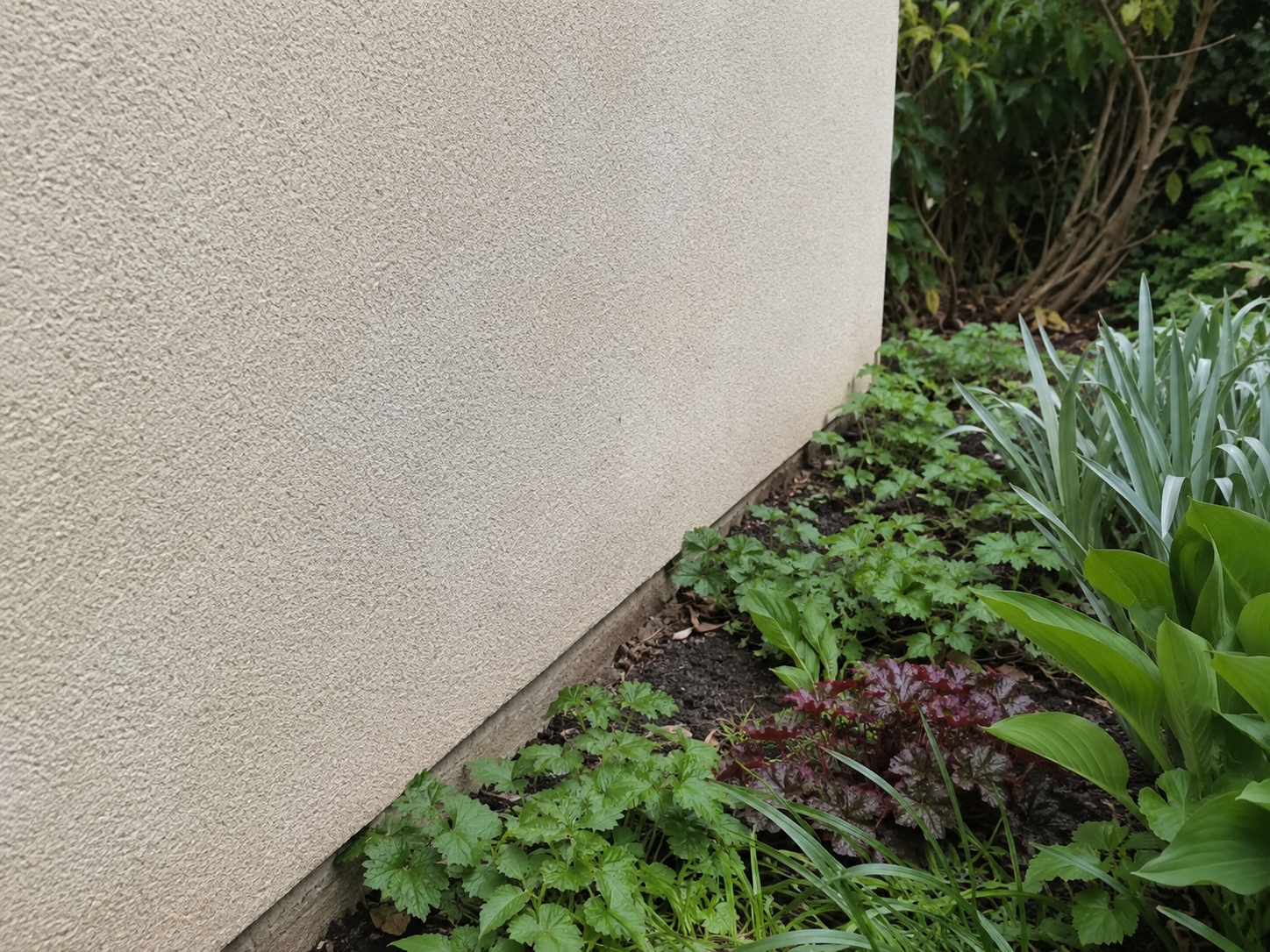
How are gardens and surrounding surfaces protected during a softwash?
Gardens and surrounding surfaces are protected before treatment begins, usually by covering sensitive plants and rinsing beds close to the wall ahead of application. This preparation step happens on every visit, not just where planting looks especially delicate.
Paths, windows and outdoor furniture near the treatment area are also considered as part of this preparation, since the goal is to keep the biocide treatment contained to the intended render or roof surface.
This preparation step is planned before work starts, based on a walk-around of the property, so protection is tailored to what's actually growing nearby rather than applied as a blanket, one-size-fits-all measure.
What does the dwell-and-rinse process involve?
The dwell-and-rinse process starts with an even application of the biocide treatment across the affected area, followed by a waiting period that allows the product to work into algae, moss or lichen at a biological level. Once that dwell time has passed, the surface is rinsed gently to clear residue.
The length of the dwell period depends on the extent and type of growth being treated, since heavier moss or long-established algae generally needs more time to be fully treated than light, recent growth.
- Assess the surface and identify any areas needing extra protection.
- Cover or protect nearby plants, paths and windows.
- Apply the treatment evenly at low pressure across the affected area.
- Allow the treatment to dwell so it can work into the growth.
- Rinse gently to clear residue without disturbing the finish.
When to call a professional
A professional softwash is worth calling in for any render, roof or garden-adjacent area where a DIY pressure wash could cause more harm than good. Preparation and protection of the surrounding area is part of the process on every visit, not an optional extra step.
This is particularly worth considering for older properties, where render and paintwork may already be more delicate, and for gardens with established planting close to the walls that would take time to recover from being disturbed.
Booking a softwashing service in County Wexford means preparation, application and rinsing are all handled as part of the visit. Homes near Courtown often choose this low-pressure exterior cleaning approach specifically to protect render and garden borders together.
Frequently asked questions
Is softwashing safe for plants and garden beds nearby?
Surrounding plants and beds are protected before any treatment is applied, typically by covering or rinsing them ahead of time. The low-pressure application also means far less product reaches the ground compared with a high-pressure wash, which helps limit any contact with nearby planting.
Can softwashing be used on painted render without affecting the colour?
Softwashing is generally suitable for painted render, since the low-pressure treatment targets organic growth on the surface rather than stripping paint. Older or already-peeling paintwork is treated with extra care, and any areas of concern can be flagged and discussed before work begins.
Does softwashing require anyone to leave the house during treatment?
There's no general need to leave the house during a softwash, since the treatment is applied to exterior walls only. Windows and doors near the treatment area are usually kept closed while work is carried out, as a straightforward precaution rather than a safety requirement.
Is softwashing safe for uPVC window frames and fascias?
Yes, the low pressure used in softwashing is gentle enough for uPVC frames, fascias and soffits, which are more easily marked or damaged by high-pressure water than by a softwash. These areas are typically rinsed as part of the same visit.